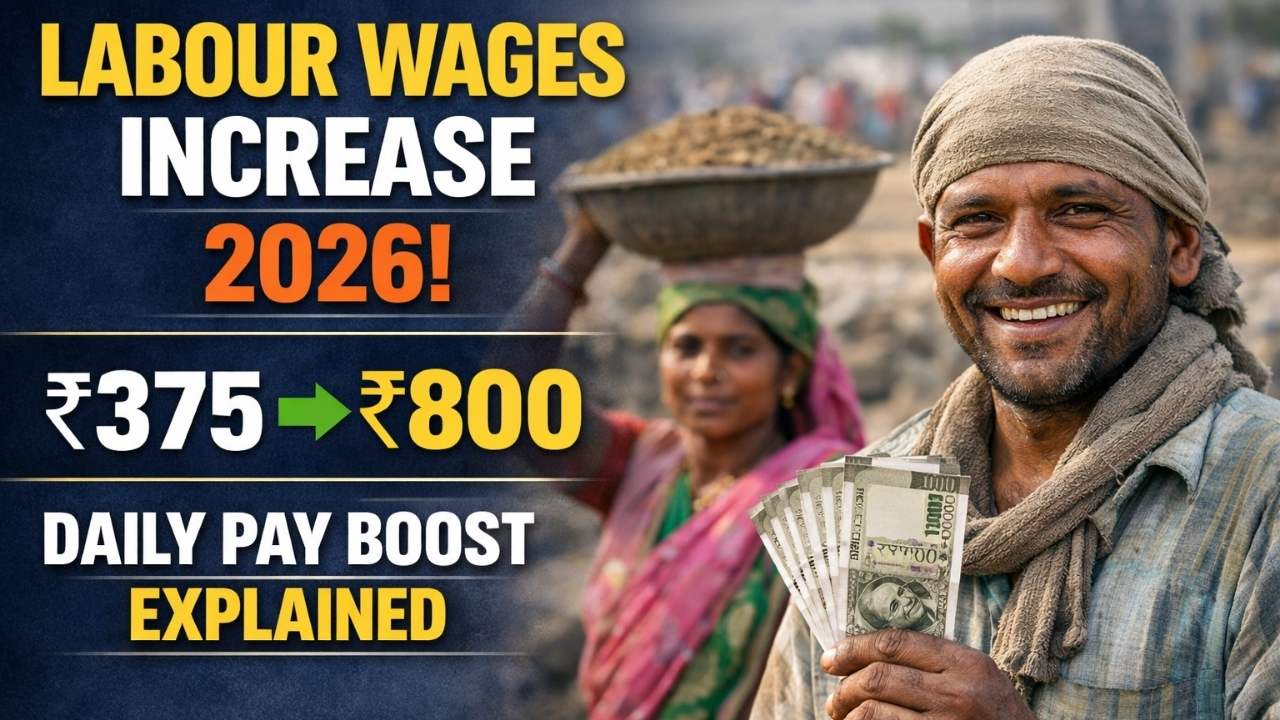
Labour Wages Increase 2026: India is witnessing important changes in labour wages in 2026 as policymakers focus on improving the income and financial security of workers. Wage revisions, labour law reforms, and inflation adjustments are shaping the new salary structure for millions of workers across sectors.
The updates are expected to impact unskilled, semi-skilled, skilled, and highly skilled workers in industries such as construction, agriculture, manufacturing, and services. These changes aim to create fair wages, improve worker welfare, and strengthen social security benefits like provident fund and gratuity.
Labour Wages Increase 2026 and Its Impact on Indian Workers
Labour wages in India are gradually increasing in 2026 due to policy reforms and economic changes. The revisions are intended to ensure fair compensation for workers while addressing the rising cost of living across the country.
Millions of workers employed in daily wage jobs, construction, agriculture, and factories may benefit from these wage increases. The changes are expected to improve income stability and help workers manage basic living expenses more effectively. 8th Pay Commission 2026:
Revised Minimum Wage Structure for Workers in 2026
The revised wage structure in 2026 reflects higher daily and monthly earnings for workers in different skill categories. These changes aim to standardize wages and ensure workers receive adequate compensation for their skills.
Unskilled workers are estimated to earn around ₹375 to ₹450 per day, while skilled workers may receive between ₹520 and ₹650 daily. Highly skilled workers can earn up to ₹800 per day, which translates to higher monthly income compared to previous years.
| Category | Estimated Daily Wage | Estimated Monthly Wage |
| Unskilled Workers | ₹375 – ₹450 | ₹20,000+ |
| Semi-Skilled Workers | ₹420 – ₹520 | ₹22,000+ |
| Skilled Workers | ₹520 – ₹650 | ₹24,000+ |
| Highly Skilled Workers | ₹650 – ₹800 | ₹26,000+ |
Government Policies Driving Wage Growth in India
Government initiatives and labour policy reforms are playing a key role in the increase of labour wages in 2026. Authorities are focusing on improving the economic condition of workers and ensuring fair wage practices across industries. Income Tax Changes From
Policies aimed at worker welfare are encouraging employers to maintain fair salary standards. These measures also help create better employment conditions for workers in both organized and unorganized sectors.
Role of National Floor Wage in Wage Regulation
The national floor wage acts as a baseline wage that states must follow while determining their minimum wage policies. The central government currently maintains a national floor wage of ₹178 per day.
States are not allowed to set wages below this level, ensuring a minimum standard of income for workers. In many regions, however, actual wages are significantly higher due to local economic conditions. SBI 2 Year FD
Proposed Large Salary Hike for Indian Labourers
Some proposals and discussions suggest the possibility of significant wage hikes in the coming years. Certain recommendations indicate increases that could be up to 2.5 times the current wage levels.
If such proposals are implemented, millions of workers across different sectors may benefit. Higher wages could improve financial stability and enhance the overall quality of life for labourers.
Impact of New Labour Codes on Salary Structure
India has consolidated many existing labour laws into four new labour codes aimed at simplifying employment regulations. These reforms are expected to influence wage calculations and salary structures. EPF Withdrawal Rules 2026:
One major change requires that basic salary must be at least 50 percent of the total cost to company. This rule affects how salaries are structured and increases contributions toward employee benefits.
Effect of Wage Reforms on Provident Fund and Gratuity
The new salary structure is likely to increase contributions to provident fund and gratuity benefits. Higher basic pay automatically leads to larger retirement savings for workers.
This change can improve long-term financial security for employees. Workers may benefit from larger retirement funds and better financial protection in the future. Before 31 March Ends:
Key Reasons Behind Labour Wage Increase in 2026
Several economic and social factors are contributing to the increase in labour wages across India. Rising inflation and higher living costs are among the most significant reasons.
In addition, labour reforms and government welfare initiatives are encouraging better wage policies. Increased demand for workers in industries such as construction and manufacturing also supports wage growth.
Economic and Social Benefits of Higher Labour Wages
Higher wages can improve the overall financial stability of workers and their families. Increased income allows workers to afford better housing, healthcare, and education.
From an economic perspective, higher wages can increase consumer spending and support economic growth. However, some businesses, particularly small enterprises, may face challenges due to rising labour costs.