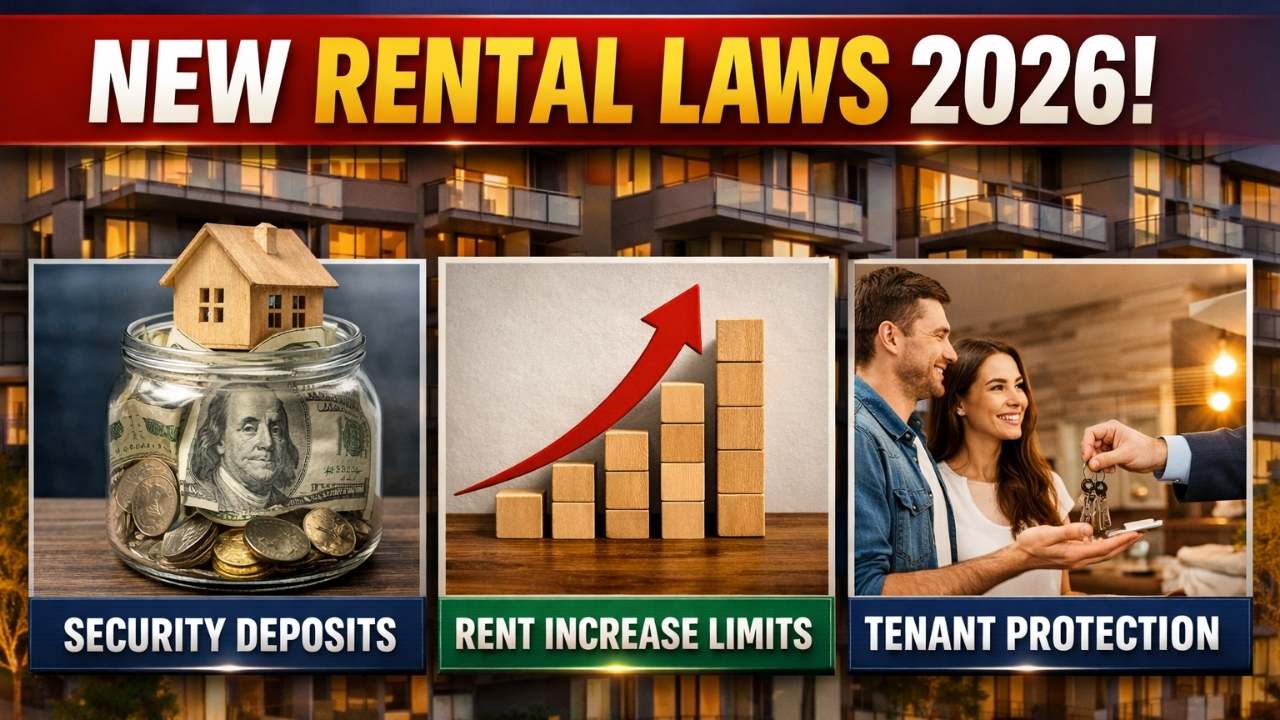
New Rental Laws 2026: India’s rental housing sector is evolving quickly as cities expand and housing demand rises. In 2026, updated home rent guidelines and state-level tenancy laws aim to create a balanced relationship between tenants and landlords. These rules clarify limits on security deposits, rent increases, and tenant rights.
The new rental framework is largely influenced by the Model Tenancy Act and various state regulations. It focuses on transparency in rent agreements, fair deposits, and dispute resolution. Understanding these rules helps tenants avoid unfair charges while allowing landlords to protect their property and receive stable income.
Home Rent Rules 2026 and Legal Framework for Tenants and Landlords
In 2026, rental regulations in India are guided mainly by tenancy laws adopted by states under the Model Tenancy framework. These laws encourage written rental agreements and mandatory registration in many states to prevent disputes. Both tenants and landlords must clearly define rent, deposit amounts, and maintenance responsibilities.
The legal framework also requires both parties to follow the terms of the rental agreement. Landlords cannot evict tenants without legal notice, and tenants must pay rent on time. These rules aim to maintain fairness, transparency, and legal protection for both sides in residential rental arrangements. Retirement Age 2026 Update:
Security Deposit Rules for Rental Homes in 2026
Security deposits are a common requirement when renting a home in India. Under modern tenancy guidelines, the maximum deposit for residential properties is generally limited to two months’ rent in states adopting the Model Tenancy Act framework.
This rule was introduced to prevent landlords from demanding excessively high deposits. The deposit acts as protection for landlords against property damage or unpaid rent. After the tenant vacates the property, the landlord must return the deposit within a defined period after deducting valid repair costs.
| Maximum Security Deposit | Usually limited to two months’ rent for residential properties |
| Rent Agreement Requirement | Written agreement recommended or mandatory in many states |
| Rent Increase Policy | Typically allowed once per year with prior notice |
| Notice Period for Rent Hike | Usually one to three months depending on agreement |
| Security Deposit Refund | Must be returned after tenant vacates and dues are cleared |
| Dispute Resolution | Rental tribunals or civil courts may handle disputes |
| Eviction Rules | Legal eviction only after proper notice and valid reasons |
| Tenant Responsibilities | Pay rent on time and maintain the property condition |
| Landlord Responsibilities | Provide habitable property and respect tenant rights |
| Applicable Laws | Model Tenancy Act guidelines and state tenancy laws |
Rent Increase Rules and Annual Rent Hike Guidelines
Rent increases are usually allowed once a year in most rental agreements. The increase percentage often ranges between five to ten percent depending on local market conditions and the terms agreed upon in the contract. NPS Withdrawal Rules 2026:
Landlords must inform tenants before implementing any rent hike. In many cases, a written notice of one to three months is required. This rule ensures tenants have enough time to plan finances or consider alternative housing options.
Importance of Written Rent Agreements in 2026
A written rent agreement is strongly recommended for every rental arrangement. It outlines rent amount, payment schedule, deposit details, maintenance duties, and notice periods for termination.
Having a written contract protects both the landlord and tenant legally. In case of disputes related to rent, eviction, or deposit refunds, the agreement acts as the primary legal document that courts or authorities rely on. Canara Bank 310-Day FD
Tenant Rights Under Modern Rental Housing Laws
Tenants have several legal protections under updated rental regulations. They have the right to a safe and livable property, protection from illegal eviction, and fair treatment regarding rent increases.
Landlords cannot enter the rented property without prior notice except in emergencies. Tenants are also entitled to receive receipts for rent payments and written notice before termination of the rental agreement.
Landlord Rights and Responsibilities in Rental Agreements
Landlords have the right to receive rent on time and ensure that tenants maintain the property properly. They may inspect the property occasionally with prior notice to check its condition. LPG Price Update 2026:
However, landlords must also ensure the property remains habitable and safe. They are responsible for structural repairs and must follow legal procedures for eviction, rent revisions, or deposit deductions.
Eviction Rules and Notice Period Requirements
Eviction rules in 2026 emphasize legal procedures and fair notice. Landlords must provide written notice if they want tenants to vacate the property due to non-payment of rent or other valid reasons.
The notice period usually ranges from one to three months depending on the agreement. If tenants refuse to vacate after notice, landlords must approach a legal authority or rental tribunal instead of taking direct action. EPS-95 Pension Hike 2026:
Security Deposit Refund Process After Vacating Property
After the tenant vacates the property, the landlord must inspect the premises for damages or unpaid dues. Any deductions must be reasonable and clearly explained to the tenant.
Most tenancy rules recommend returning the remaining security deposit within one month. Timely refunds help maintain transparency and reduce conflicts between tenants and property owners.
How Rental Disputes Are Resolved in 2026
Rental disputes may arise due to deposit deductions, rent increases, or eviction notices. In many regions, dedicated rental authorities or tribunals handle such issues quickly.
These authorities review rent agreements, payment records, and property conditions before making decisions. The dispute resolution system is designed to reduce lengthy court battles and offer quicker justice for both landlords and tenants.